
Nobody tells you what happens after you walk through those factory doors. Here are 7 things I wish someone had told me before I joined an F1 team.
1. The pace is absolutely relentless
If you thought university was tough, if you thought Formula Student was a challenge, if you thought your master’s thesis was a test of endurance… you were wrong. Those were training camps. Boot camps for what was coming.
The pace is brutal. There are no slow weeks. There are no quiet days. Every single day there’s a problem to solve, a simulation batch to run, a correlation to check, a deadline that’s already passed. You get thrown into the deep end on day one. They don’t hold your hand. They don’t give you time to settle in. They give you a problem and expect you to solve it yesterday.
You’ll feel overwhelmed. You’ll feel like you’re drowning. That’s normal. The people who succeed are the ones who learn to swim fast.
2. Get ready to be surrounded by people who are better than you
If you’ve spent your whole life being the smartest person in the room (top of your class, best in your year, the one everyone came to for help…), prepare for a humble check.
In F1, you’ll be surrounded by people who are more dedicated than you, more competent than you, faster than you, smarter than you, with better ideas than you. And that’s not a bad thing. It’s the best thing.
You’ve walked into a room full of number ones. And not everyone can be the number one. That’s just math. In a room full of geniuses, being the smartest isn’t the goal. Being the one who learns the fastest is.
So how do you handle it? Humility. Accept that you’re not the best anymore, and that’s okay. Curiosity. Watch how others work, ask how they think, steal their methods. Growth. If you’re the smartest person in the room, you’re in the wrong room. In F1, you’re in the right room. Now get to work.
There’s a video that explains this better than I ever could, and I’d recommend watching it if you’re serious about working in this environment.
3. Burnout is real, so play the long game
You’re excited. You’re motivated. You want to prove yourself. You want to show everyone that you deserve to be there. So you work fourteen-hour days, skip lunch, answer emails at 11 PM, come in on weekends. And then three months later, you crash.
Burnout in F1 isn’t a myth. It’s a pandemic, and it takes down the best and brightest. If you push too hard too fast, you’ll burn out before your first season ends, and then you’re no use to anyone.
The reality is that you’ll have more than enough time to work. There will be plenty of opportunities. Late nights, early mornings, triple headers. You don’t need to prove your dedication in the first month. Find your rhythm. Set boundaries early, even if they’re flexible. Learn to say no strategically. Take your days off seriously.
Remember, this is a marathon, not a sprint. The people who last ten-plus years in F1 aren’t the ones who worked the hardest in year one. They’re the ones who worked smart and stayed sane.
4. Leave no stone unturned, make no assumptions
In high-performance environments like F1, everything is chased and everything is questioned. Nothing is assumed. You can’t look at a result and say “close enough.” You can’t look at a correlation gap and say “it’s probably fine.” You can’t see an anomaly and say “it’s not important.”
Everything is important. Every thousandth of a second matters. Every correlation mismatch is a potential performance loss. Every unexplained behavior is a risk. If you can’t explain it, you don’t understand it. And if you don’t understand it, you can’t improve it.
In university, close enough was good enough for the grade. In F1, close enough is losing. You need exact. So you ask the hard questions. You dig deeper than anyone else. You never stop chasing the why. You correlate everything, question everything, validate everything.
Your job isn’t just to solve problems. It’s to understand them completely.
5. Your personal life will take a hit, so be ready for it
F1 is amazing. And F1 will take everything from you if you let it.
If you work trackside, forget about weekends. Friday nights are gone. Saturday plans are out the window. Sunday brunch? You’ll be in a garage. Your friends won’t understand why you can’t make it to their wedding. Your partner will have to accept that you’re gone for half the year.
And on top of that, you’ll probably live in the middle of nowhere. Most F1 teams are based in rural England—Oxfordshire, Northamptonshire. Beautiful countryside, absolutely nothing to do. You’re not just joining a team. You’re moving to a new world, and that world has different rules.
So how do you survive? Accept the trade-off. You’re choosing F1 over a normal life, so own it. Build a life around F1. Make friends in the paddock. Find hobbies that work with your schedule. Create a routine that works for you, not against you. Communicate with your partner, your family, your friends. Set expectations early. And when you have time off, actually use it. Don’t just lie in bed scrolling. Go out, travel, see people.
You can be happy in F1. But you have to build that happiness. It won’t come to you.
6. The best networking happens from the inside
It’s incredibly hard to get into F1, and it’s incredibly easy to switch teams once you’re in.
The best place to network in F1 is inside an F1 team. Your colleagues will move. Engineers jump between teams constantly. That guy in the next department might be at Ferrari in two years. That girl who started the same week as you might be at Red Bull in three years. Your reputation travels. F1 is a small world. Everyone knows everyone. If you’re good, people will notice. If you’re bad, people will notice faster.
Build relationships with everyone. The person who answers the phone at reception today could be the hiring manager at Aston Martin tomorrow. Be helpful, not just to your boss but to everyone. Be reliable. If you say you’ll do something, do it. Be memorable for the right reasons. And stay in touch. When people leave, send them a message. Keep the connection alive.
You never know who will open the door to your next opportunity.
7. Don’t be afraid to ask questions
When you join an F1 team, there’s a natural fear. You’re new. You’re surrounded by people who’ve been there for years. You don’t want to look stupid. You don’t want to seem incompetent. So you stay quiet, you nod along, you pretend you understand.
In F1, not asking the question is a bigger mistake than asking a stupid one. You haven’t been in this team for long. You don’t know their methodologies, their acronyms, their culture. That’s okay. You’re supposed to be learning.
Asking questions shows you’re engaged. It shows you care. It shows you want to get it right. Asking questions also prevents mistakes, and mistakes cost time.
Ask questions early. Learn the acronyms, learn the processes, learn the shortcuts. Let your questions decrease over time, but never stop being curious. The day you stop asking questions is the day you stop growing.
MISTAKE #1: The “Fanboy”
“Statement: My dream is to work in F1. I watch it since I was a child“
Why it kills you:
You just told me you’re a spectator. F1 teams don’t hire fans; they hire builders. Listing the sport you’re applying to work in is like applying to be a chef and listing “eating food” as a hobby. It adds zero value and screams “I have no real engineering curiosity.”
The Fix:
Either delete the statement (safe move) or list hands-on, technical, measurable projects.
MISTAKE #2: Listing “Microsoft Word / Excel / PowerPoint”
“Skills: Microsoft Office Suite, Word, Excel, PowerPoint, Outlook.”
Why it kills you:
Let me translate this for you: “I have the baseline computer literacy of a 12-year-old.”
In an F1 factory, if you highlight MS Word as a skill, the recruiter assumes you have nothing better to show. Word is not a tool; it’s a word processor. Excel? Only if you wrote VBA macros or Power Query — otherwise, it’s just a grid. PowerPoint is for presenting, not for engineering. Wasting 3 lines on these generic tools pushes your actual keywords (Python, MATLAB, Catia, ANSYS, Simulink, LapSim) further down the page. In a 7-second scan, the recruiter might miss your only relevant software because you buried it under “Outlook”.
The Fix:
Remove all basic office tools. Only list specialized, job-specific software. If you must mention Excel, specify why: “Excel (VBA automation for data post-processing)”.
MISTAKE #3: The Spray-and-Pray “One-Size-Fits-All”
Uploading the exact same CV for “Aerodynamics”, “Vehicle Dynamics”, and “Composite Manufacturing” roles.
Why it kills you:
We can smell this from orbit. If you apply for a Composites role and your CV mentions “Electrical Systems” six times, we know you didn’t even read the job spec. It shows zero attention to detail. If you can’t tailor a PDF, it is already speaking about your work ethic. You are probably tired of hearing this but one targeted CV is worth more than a hundred random applications. Quality beats quantity almost every time.
The Fix:
For every single application, at the bare minimum re-order your bullet points so that the top 5 directly mirror the top 5 requirements in the job advert.
- Job asks for “Catia V5”? → Move that to bullet #1.
- Job asks for “Fatigue analysis”? → Mention it in bullet #2.
- Job asks for “Composite layup simulation”? → Bullet #3.
MISTAKE #4: Not Writing the Keywords Recruiters Are Searching For
“Experience with simulation software and data analysis”
(When the recruiter is searching for: “Python, MATLAB, Simulink, LapSim, ATLAS, Catia V5…”)
Why it kills you:
Let me tell you how F1 recruitment actually works. The HR person doesn’t know the difference between CFD and FEA. They have a checklist provided by the Head of Department. That checklist contains specific nouns: Python, Catia, ANSYS, Simulink, Vehicle Dynamics, Composites…
They Ctrl+F that PDF. If your CV doesn’t contain those exact strings of text, you are deleted in 2 seconds. They don’t infer. They don’t assume. They match.
Worse: many teams use Applicant Tracking Systems (ATS) that rank your CV based on keyword density. If you wrote “data analysis” but the job asked for “telemetry post-processing”, the ATS gives you 0 points. You never reach a human.
You have the skills, but you buried them in prose or used vague categories like “simulation software” instead of naming the specific tool. The recruiter doesn’t have time to guess. They move to the next CV.
The Fix:
Read the job description like a cheat sheet. Copy the exact software names, methodologies, and skills HR listed (verbatim) and inject them into your CV based on your experience.
MISTAKE #5: Your CV Looks Like a Labyrinth (No Visual Hierarchy)
A grey wall of text. Same font size everywhere. No clear entry points. No visual breath.
Why it kills you:
The recruiter has 7 seconds and a headache. If your CV looks like a dense academic paper—everything 11pt Arial, black on white, paragraphs stacked like bricks—their eyes bounce around randomly and give up. They don’t read a labyrinth; they abandon it. In F1, clarity is speed. If your CV isn’t instantly navigable, you’re signaling that your thinking is equally messy.
The Fix:
You don’t need a graphic design degree. You need consistent visual rules that guide the recruiter’s eye straight to the good stuff.
Your CV should feel like a pit garage: organized, minimalist, color-coded just enough to find the right tool instantly, and utterly devoid of clutter. Make it look like you respect the recruiter’s time. Because if you don’t, they’ll respect yours by throwing it in the bin.
1. Introduction
Welcome to Racetrack Careers (“we,” “our,” or “us”).
We are committed to protecting your privacy and handling your personal information transparently and responsibly. This Privacy Policy explains how we collect, use, disclose, and safeguard your information when you visit our website, use our services, subscribe to our newsletter, create an account, or otherwise interact with our platform (the “Platform”).
By using the Platform, you acknowledge that you have read and understood this Privacy Policy.
2. Information We Collect
Depending on how you interact with the Platform, we may collect the following categories of information.
Information You Provide
This may include:
- Name
- Email address
- Account credentials
- Professional information you choose to provide
- Resume or CV (if uploaded)
- Information submitted through contact forms
- Newsletter subscription preferences
- Any other information you voluntarily provide
Information Collected Automatically
When you use the Platform, we may automatically collect certain technical information, including:
- IP address
- Browser type
- Device information
- Operating system
- Pages visited
- Time spent on pages
- Referral URLs
- Date and time of access
- Cookie identifiers
3. How We Use Your Information
We may use your information to:
- Provide and operate the Platform;
- Create and manage your account;
- Deliver newsletters and requested communications;
- Respond to inquiries and support requests;
- Improve the Platform and user experience;
- Monitor usage and analyze website performance;
- Detect fraud, abuse, or security incidents;
- Comply with legal obligations;
- Enforce our Terms of Service.
We will only process your personal data where we have an appropriate legal basis to do so.
4. Legal Basis for Processing (GDPR)
Where applicable, we process your personal data under one or more of the following legal bases:
- Your consent;
- Performance of a contract;
- Compliance with legal obligations;
- Our legitimate business interests, provided these do not override your fundamental rights and freedoms.
5. Cookies and Similar Technologies
We use cookies and similar technologies to:
- Keep you logged in;
- Remember your preferences;
- Analyze website traffic;
- Improve website functionality;
- Measure the effectiveness of marketing campaigns.
You may disable cookies through your browser settings, although some parts of the Platform may not function correctly.
6. Analytics
We may use third-party analytics providers to understand how users interact with our Platform.
These providers may collect information such as:
- Device identifiers;
- Browser information;
- Pages visited;
- Session duration;
- General geographic location based on IP address.
7. Email Communications
If you subscribe to our newsletter or otherwise consent to receive communications, we may send:
- Career updates;
- New job opportunities;
- Industry news;
- Educational content;
- Product updates;
- Marketing communications.
You may unsubscribe at any time by using the unsubscribe link included in every email or by contacting us.
8. Sharing Your Information
We do not sell your personal information.
We may share information with:
- Service providers who help us operate the Platform;
- Hosting providers;
- Email delivery providers;
- Analytics providers;
- Payment processors (if applicable);
- Professional advisers;
- Government authorities where required by law.
All third-party service providers are required to protect your information appropriately.
9. International Data Transfers
Your information may be transferred to and processed in countries outside your country of residence.
Where required by law, we implement appropriate safeguards for international data transfers, including Standard Contractual Clauses or other lawful transfer mechanisms.
10. Data Retention
We retain personal information only for as long as reasonably necessary to:
- Provide our services;
- Comply with legal obligations;
- Resolve disputes;
- Enforce our agreements;
- Maintain legitimate business records.
When information is no longer required, it will be securely deleted or anonymized.
11. Your Rights
Depending on your jurisdiction, you may have the right to:
- Access your personal information;
- Correct inaccurate information;
- Delete your information;
- Restrict processing;
- Object to processing;
- Withdraw consent;
- Request data portability;
- Lodge a complaint with your local supervisory authority.
To exercise these rights, please contact us.
12. Security
We implement appropriate technical and organizational measures designed to protect your personal information against unauthorized access, disclosure, alteration, or destruction.
However, no method of transmission over the Internet or electronic storage is completely secure, and we cannot guarantee absolute security.
13. Children’s Privacy
The Platform is not intended for individuals under the age of 16.
We do not knowingly collect personal information from children. If we become aware that such information has been collected, we will take reasonable steps to delete it.
14. Third-Party Websites
The Platform may contain links to third-party websites.
We are not responsible for the privacy practices, content, or policies of those third-party websites. We encourage users to review their privacy policies before providing any personal information.
15. Changes to This Privacy Policy
We may update this Privacy Policy from time to time.
Any changes will become effective upon publication on this page. The “Last Updated” date at the top of this Policy will indicate when revisions were made.
16. Contact Us
If you have any questions regarding this Privacy Policy or our privacy practices, please contact us through the contact details provided on the Platform.
Joining Cadillac Formula One Team is unlike joining any other team on the grid. You’re not walking into decades of history, established processes, or a factory that’s been refined over generations. You’re joining a team that is quite literally being built from scratch. That comes with frustrations, uncertainty, and plenty of rough edges—but it also offers something that almost nobody in Formula 1 gets to experience: the opportunity to shape a brand-new constructor from day one.

The team is based in Silverstone, right in the heart of the UK’s famous Motorsport Valley, directly opposite Aston Martin’s impressive Technology Campus.
Unlike some of its neighbours, however, Cadillac’s current facilities don’t aim to impress with architecture. The team currently occupies several industrial buildings spread across the site. That said, the current setup is only temporary. The team is expected to move into one of the renovated buildings currently being fitted out internally. While few employees have seen the finished result yet, expectations are that the new workspace will represent a significant step forward as Cadillac continues investing in its long-term infrastructure.
The reality is that this project is still under construction in every possible sense. Only a year ago, there were no manufacturing machines installed, no production lines, and very little beyond office space and computers. Today, the factory is steadily taking shape, with infrastructure being added at an impressive pace. Every few months the site looks noticeably different, reflecting just how quickly the organisation is growing.
Cadillac’s technical operation is also distributed across multiple locations. The driver simulator is based in the United States, while the wind tunnel programme runs from Cologne. It’s a global operation from day one, requiring close collaboration between teams spread across different countries as the project matures.
For now, employees shouldn’t expect the lifestyle perks that some rival teams advertise. The focus has been firmly placed on getting the race team operational first, with employee amenities expected to arrive later as the organisation becomes more established.
The people are perhaps the most interesting aspect of Cadillac today. As with any start-up operation, the workforce is exceptionally young. Many engineers are experiencing Formula 1 for the first time, while experienced personnel are still arriving from across the paddock. That inevitably creates a steep learning curve, and the organisation is still developing the depth of knowledge that more established teams take for granted.
What stands out, however, is the atmosphere. There is a genuine feeling that everyone is building something together. Those who joined during the early stages share a unique sense of ownership and camaraderie that is difficult to replicate inside larger organisations. Departments work closely together, communication tends to be informal, and there’s an excitement that comes from watching a Formula 1 team emerge almost in real time.
Of course, building a team from nothing also means living with the growing pains. Anyone joining Cadillac should expect an environment where adaptability, patience, and initiative are just as important as technical ability.
The team offers a great opportunity to say, years from now, “I was there when it all started.” Very few Formula 1 engineers ever get the chance to build an entire constructor from the ground up.
The team’s headquarters are located in Grove, Oxfordshire, deep in the rural English countryside. Access is extremely difficult without a car—public transport is virtually non-existent, and the nearest train station is several miles away.
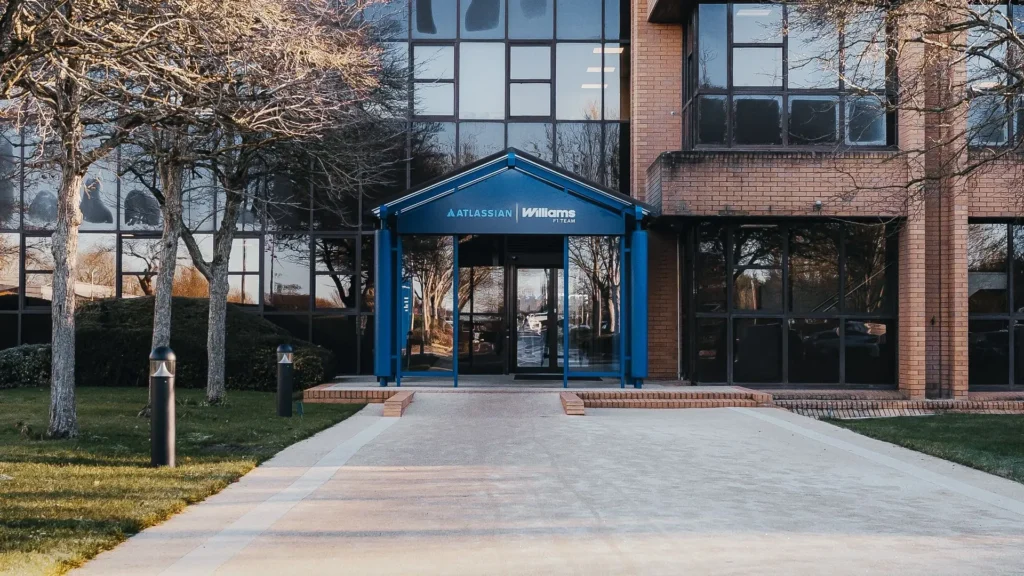
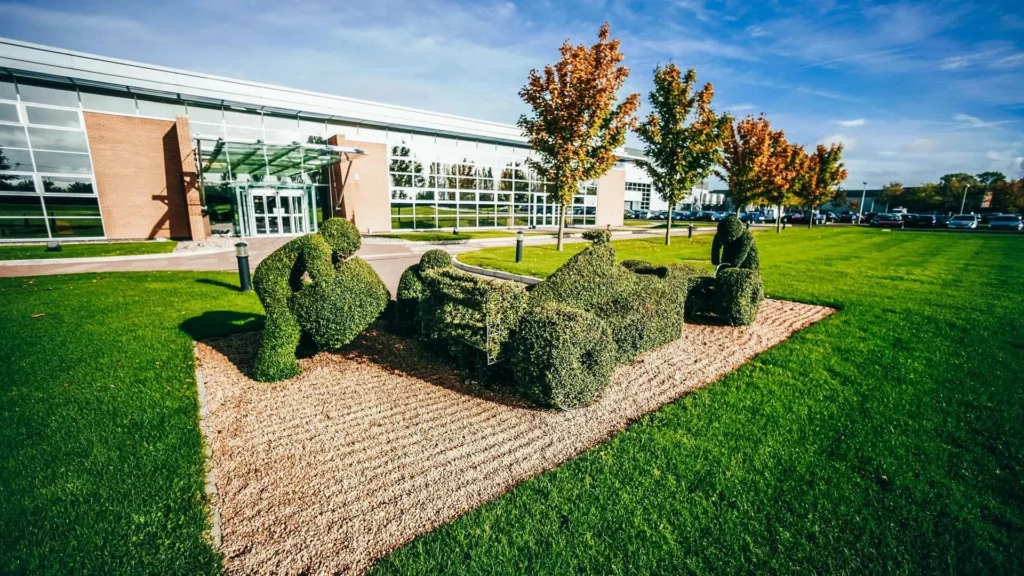
The Grove facility is extensive and self-contained, comprising multiple buildings connected by internal walkways. Among these is Williams Advanced Engineering, a separate division that works on non-F1 projects, including battery technology and electrification for various industries, as well as Williams Heritage, which maintains and runs the team’s historic car collection. All of these are easily accessible on foot from within the campus. The site also features standard amenities you would expect from a major F1 team, including an on-site canteen and a gym for staff.
Some of the buildings and facilities are showing their age, but the team prefers to call it “vintage” rather than outdated—a nod to the history embedded in every corner of the site.
The most practical place to live is Oxford itself, a beautiful, historic city with excellent amenities, a vibrant atmosphere, and plenty of movement. It is not cheap—Oxford is one of the UK’s most expensive cities—but it offers a quality of life, with its iconic architecture, museums, and cultural scene, that makes it a very desirable place to call home.
Williams also offers extensive work experience and internship opportunities, making it an ideal place to launch a career in motorsport. From engineering placements to business support roles, the team actively welcomes students and graduates who are eager to learn from industry professionals in a live, high-performance environment. The scale of the ongoing transformation means that even early-career hires can gain meaningful exposure to real projects, working alongside experienced engineers and strategists as the team rebuilds.
After a difficult and prolonged period in the midfield, the team is now undergoing a genuine revolution. Under the leadership of Team Principal James Vowles, who joined from Mercedes, Williams has embarked on a comprehensive transformation that has become increasingly visible over the last three years. The culture is shifting, the technical direction is sharper, and the results on track are beginning to reflect the changes behind the scenes. This is a team in the midst of a rebuild, but one with clear momentum and a renewed sense of purpose.
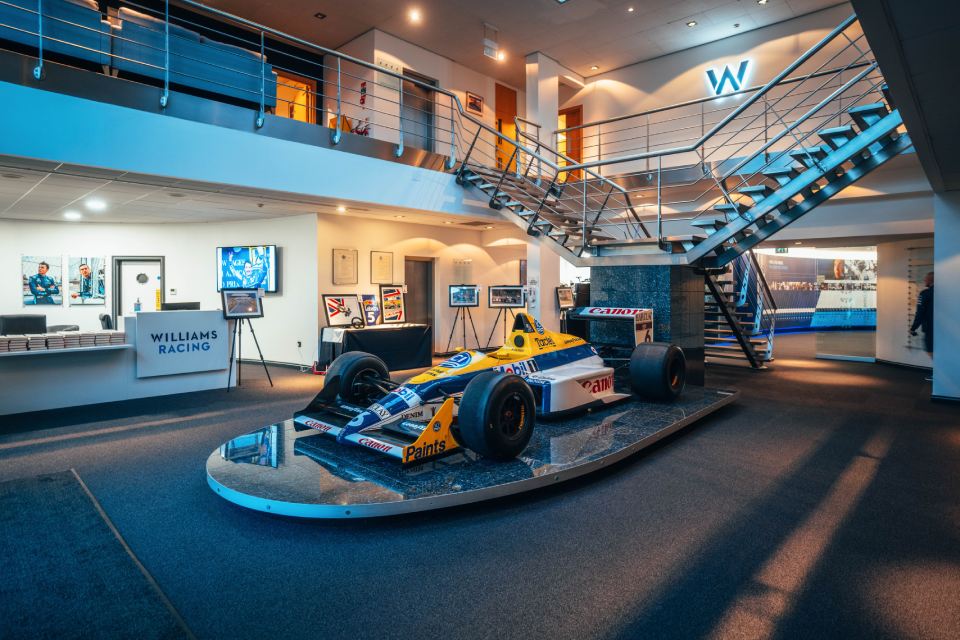
Williams offers something genuinely special. It is a team in transition, moving from its troubled past toward a brighter future, and that means opportunities. The scale of the transformation underway means that new employees are not just joining a team; they are helping to rebuild one of the most iconic names in the sport.
Mercedes-AMG Petronas Formula One Team’s headquarters in Brackley is one of the most advanced motorsport facilities in the world, and is where many championship-winning Formula 1 cars have been designed, developed, and built. Behind the polished image, there are plenty of details that aren’t obvious from the careers page.
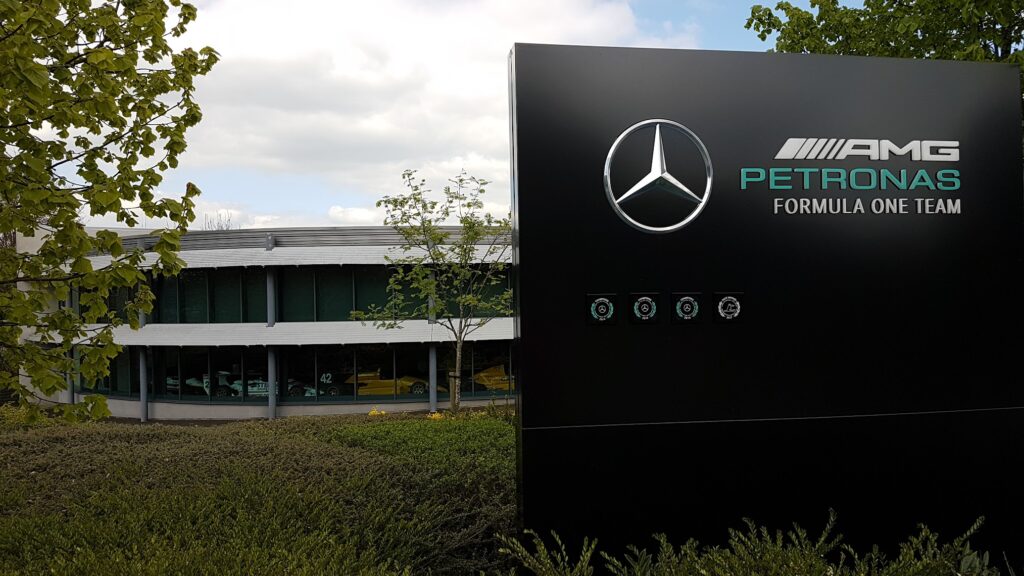
The Brackley campus is primarily focused on Formula 1 chassis operations, but it’s important to understand how Mercedes’ F1 organization is structured:
Mercedes-AMG Petronas Formula One Team (Brackley): Also known as Mercedes Grand Prix (or MGP for short by the insiders). This is where the chassis side of the Formula 1 team operates. Aerodynamics, wind tunnel, design, composites, manufacturing, race engineering, vehicle dynamics, operations, and most support functions are based here. If you’re working on the car itself (excluding the power unit), this is where you’ll likely be.
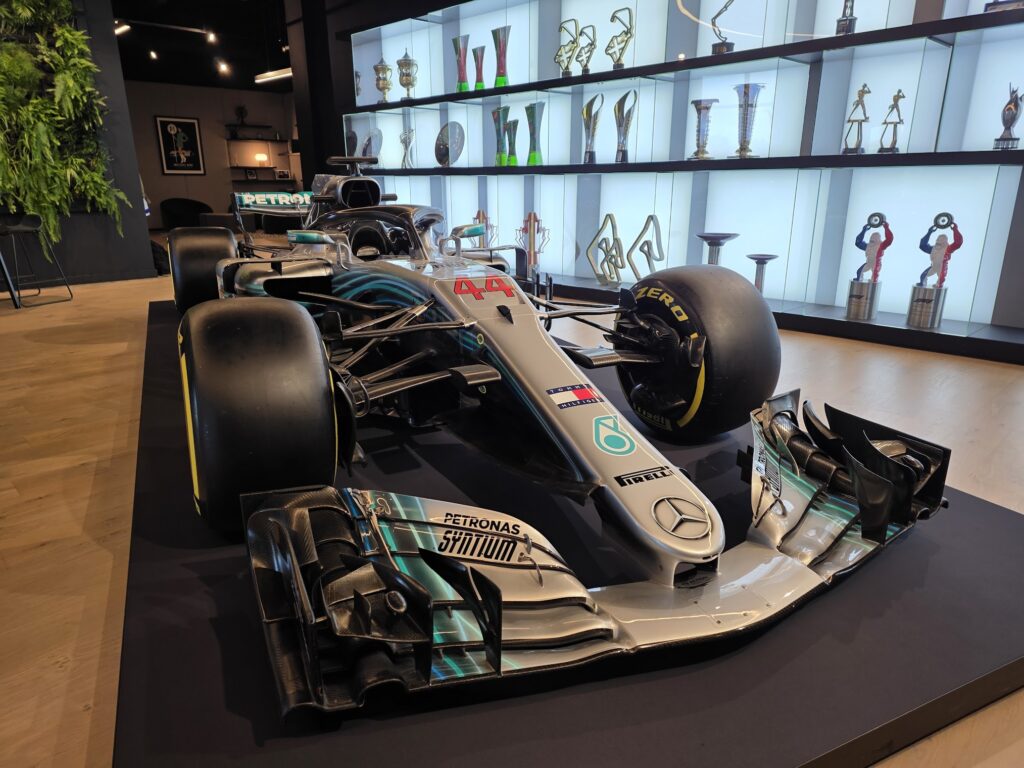
Mercedes-Benz Applied Science (Brackley): Informally known as MBAS or as “Applied Science” is the non-racing engineering division of the Brackley team, located in a separate building of the same campus, MBAS deal primarily with non-f1 engineering challenges, such the development of the Mercedes-AMG ONE car as well as sailing and cycling engineering for their partner INEOS.
Mercedes-AMG High Performance Powertrains (Brixworth): Known as HPP for short, this campus is around 30 minutes away from Brackley, the Brixworth facility develops and builds the Formula 1 power units. Although both sites are part of Mercedes’ F1 operation, they function as separate campuses. If your role involves engines, hybrid systems, ERS, or powertrain development, you’ll almost certainly be based in Brixworth rather than Brackley.
Both facilities work extremely closely, but don’t assume a Mercedes F1 job automatically means you’ll spend time at both locations. Most employees are based at one site.
Fun fact: Even though the two campuses work extremely closely, they still carry legacy differences as big as MGP using Catia for their CAD work while HPP uses Siemens NX. They also have different websites and by extension different careers pages where they list their vacancies, luckily we are here to aggregate all F1 jobs into one single convenient page.
The Brackley campus is modern, spotless, and purpose-built for Formula 1. Compared to many traditional engineering companies, the facilities feel exceptionally well maintained. Employees have access to an on-site restaurant serving breakfast and lunch, plenty of collaborative meeting spaces, and large open engineering offices. Throughout the buildings you’ll find championship-winning cars, trophies, and reminders of the team’s history.
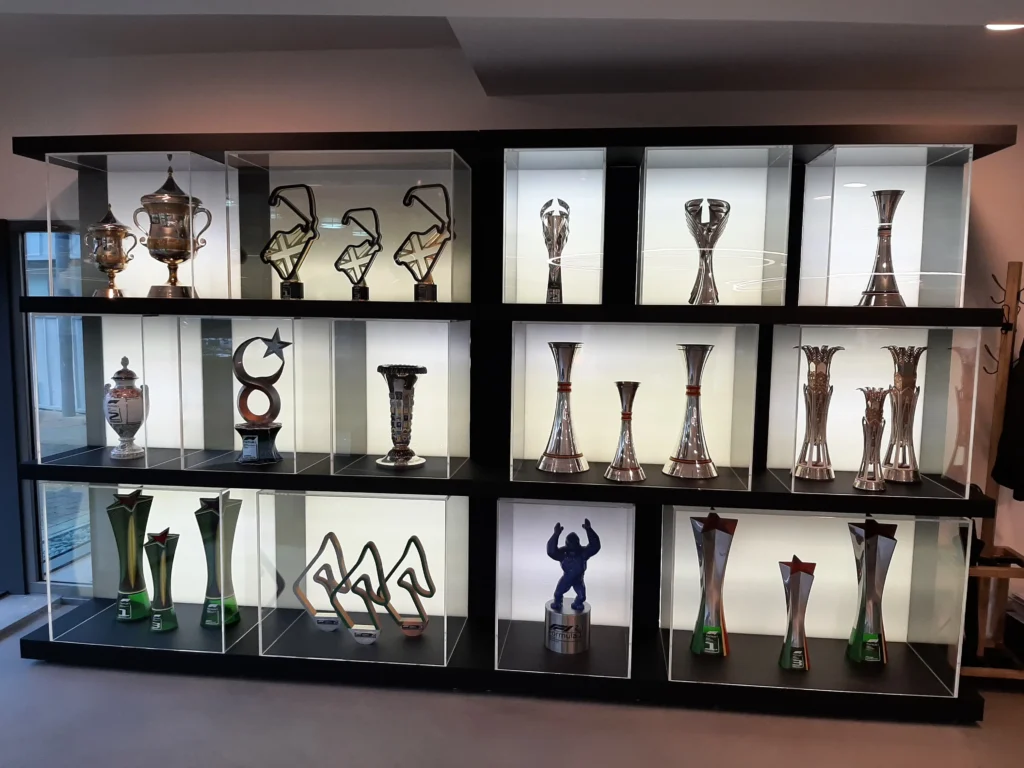
Insider tip: If you have an interview, arrive early. Security is understandably strict, and reception is not exactly close to the main gate, allow for a 5 minute walk. The site is visible and easy to find, but unlike other F1 teams’ campuses, this is not an open road you can roam freely, so make sure you give security a good reason to let you through.
Brackley itself is a small market town with not a lot going on. Many employees choose to live in nearby towns such as Northampton, Banbury, Towcester, or Milton Keynes, depending on their commute and lifestyle preferences. Like much of central England, the weather is often grey, particularly during winter, but the countryside surrounding the area offers plenty of quiet roads, walking routes, and villages if you enjoy a slower pace outside work.
The work environment reflects Mercedes’ reputation. Processes are highly structured, documentation is taken seriously, and attention to detail is expected at every level. While innovation is constant, it’s supported by rigorous engineering discipline. Something to note is that new and revolutionary ideas are not just welcomed, they are strongly encouraged.
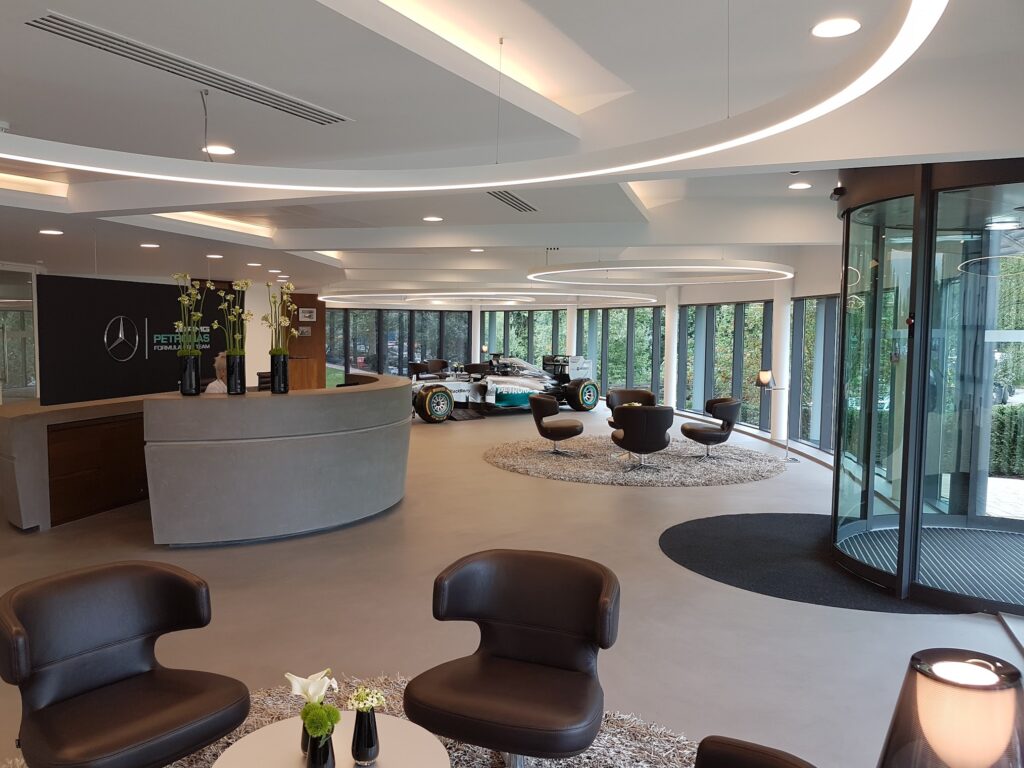
If you’re joining Brixworth, expect a slightly different engineering culture. Power unit development brings together specialists in combustion, electrical engineering, controls, thermodynamics, manufacturing, and hybrid systems, creating a unique environment that’s distinct from the chassis-focused teams in Brackley.
Insider culture tips:
- Preparation matters. Mercedes has a reputation for being exceptionally organized, and that extends to interviews, meetings, and day-to-day engineering work.
- Collaboration between departments is constant. Even highly specialized engineers regularly interact with manufacturing, operations, aerodynamics, and trackside teams.
- Continuous improvement is deeply embedded in the culture. Even after race wins, teams spend significant time analysing what could have been done better.
- During busy periods leading up to a new car launch or major upgrade, expect the pace to increase significantly. Deadlines in Formula 1 are immovable.
Working at Mercedes-AMG Petronas Formula One Team offers the chance to contribute to one of the most successful organisations in Formula 1 history. Whether you’re developing aerodynamic surfaces in Brackley or building championship-winning power units in Brixworth, you’re surrounded by engineers pushing the limits of performance every day. The facilities are world-class, the standards are incredibly high, and while the environment is demanding, it’s also one where you’ll constantly learn from some of the best people in motorsport.
Few names in motorsport carry the prestige and history of Ferrari. Based in Maranello, the team offers a unique Formula 1 experience unlike any other on the grid. As one of the very few teams located outside the UK, it provides the opportunity to enjoy the Italian lifestyle while working at one of the sport’s most iconic organisations. Most employees choose to live in nearby Modena, a vibrant and comfortable city located around 30 minutes from the factory, offering an excellent balance between work and the renowned dolce vita of northern Italy.
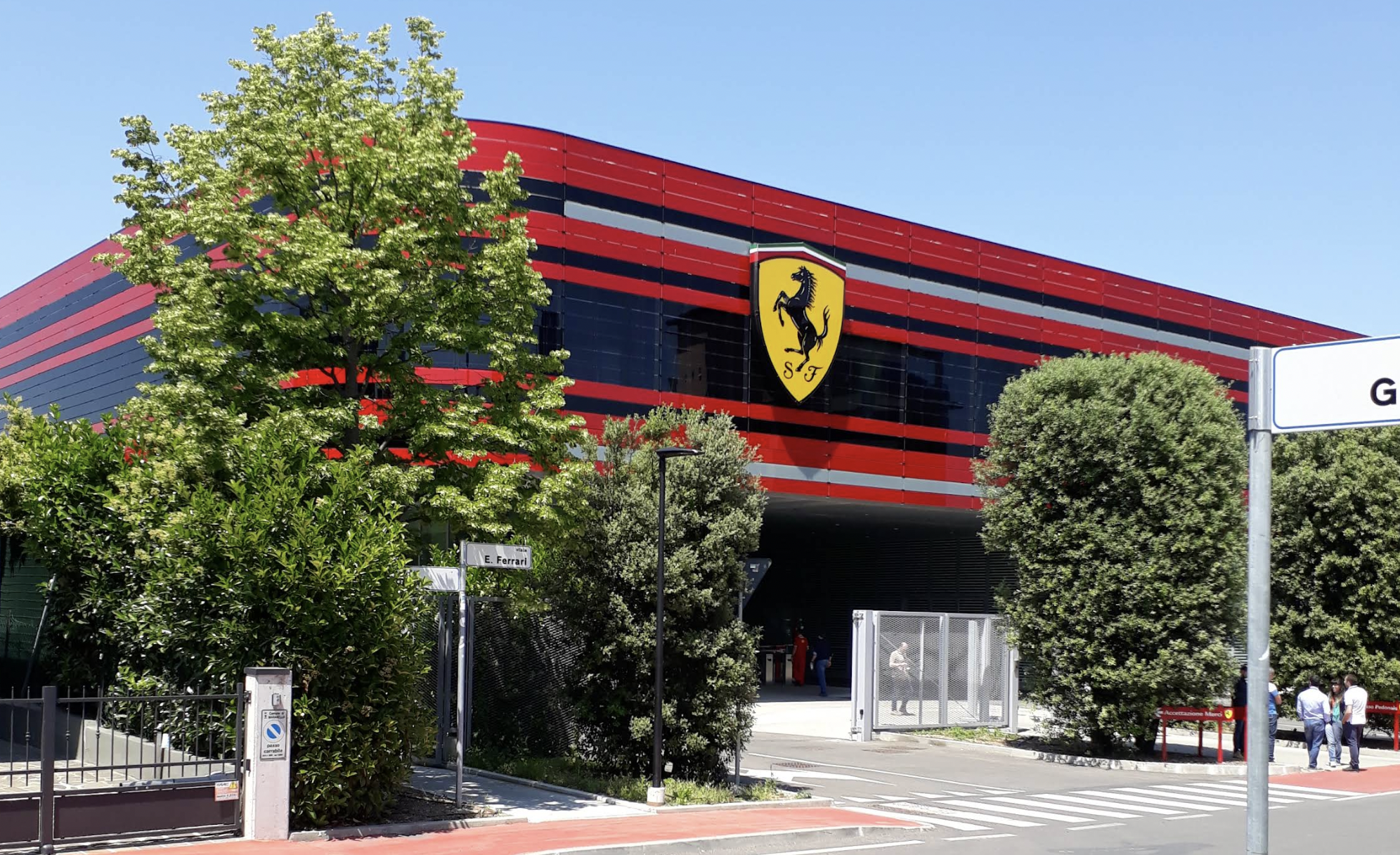
Sorry to break it down to you, but joining Ferrari isn’t like applying to just any F1 team. If you’re waiting for a job posting to appear on their careers page, you might be waiting a very long time.
Here’s the reality: Ferrari operates with a level of secrecy and exclusivity that makes McLaren look like an open office startup. They are obsessively protective of their image, their intellectual property, and their legacy. This isn’t just a workplace; it’s an Italian institution, a national symbol, and a brand that transcends motorsport. They don’t just hire anyone—they select.
Most engineering positions at Maranello are never advertised publicly. The talent pipeline is almost entirely built through:
- Internships and graduate programmes – the Ferrari Engineering Academy is their primary feeder system, grooming young talent from top universities and molding them into “Ferrari people” from day one.
- University partnerships – they handpick students from the best engineering schools in Italy and abroad, often before they’ve even graduated.
- Word-of-mouth and headhunting – if you’re not already on their radar, you’re probably not getting in.
And if you do manage to get in? The culture is intense. You’re not just an engineer; you’re a guardian of the Prancing Horse. Everything you do, every design you create, every line of data you touch is guarded like state secrets. There’s a reason why Ferrari has historically been reluctant to share telemetry or even let rival teams get close to their garage.
Now, here’s the other side of the coin: they will come for you if you have something they want. If you’re coming from a rival team—especially from a top-performing outfit like Red Bull, Mercedes, or yes, even McLaren—and you bring a track record of innovation, aerodynamic expertise, or strategic brilliance, they might just knock on your door. Ferrari has a history of poaching talent when it sees a skillset that could close the gap to the front. But even then, the scrutiny is immense.
But remember: joining Ferrari is about fitting into a culture that is fiercely Italian, deeply traditional, and relentlessly demanding. You don’t just work for Ferrari—you belong to it, and they expect that level of loyalty in return.
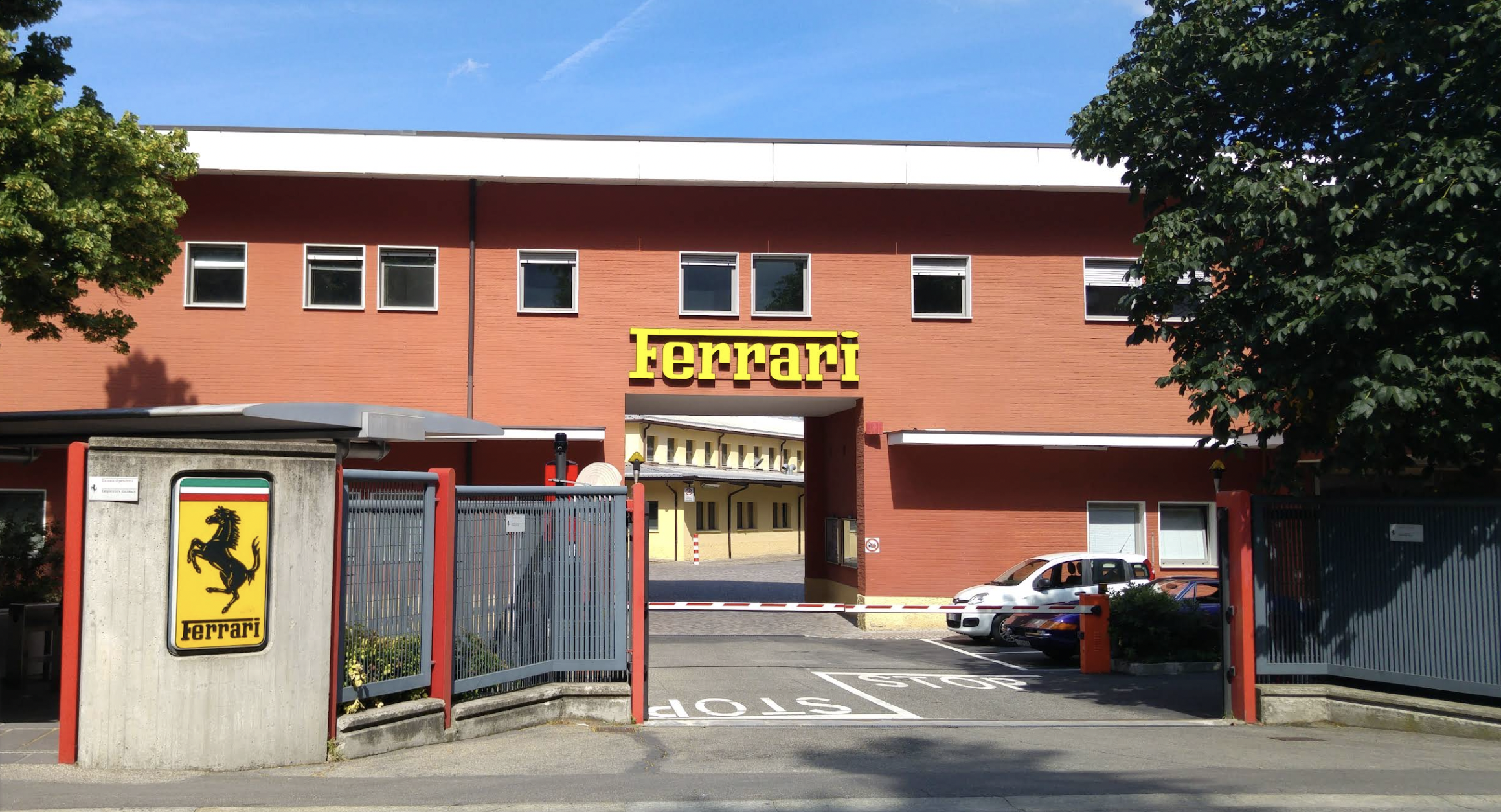
The Maranello campus is unique in that the Formula 1 facilities sit alongside Ferrari’s GT – road car operations-. The employee canteen is located across the road within the road car campus, meaning that even a lunch break offers a glimpse into Ferrari’s wider world, surrounded by the production of some of the most recognisable sports cars ever built. This close connection between Formula 1 and Ferrari’s automotive heritage creates an atmosphere that is difficult to find anywhere else in motorsport.
Outside the factory, Maranello itself revolves around Ferrari. The town is filled with Ferrari-themed cafés, museums, merchandise stores, and even road cars available for hire, making the brand an integral part of everyday life. Living and working there means being immersed in Ferrari’s history and identity every day.
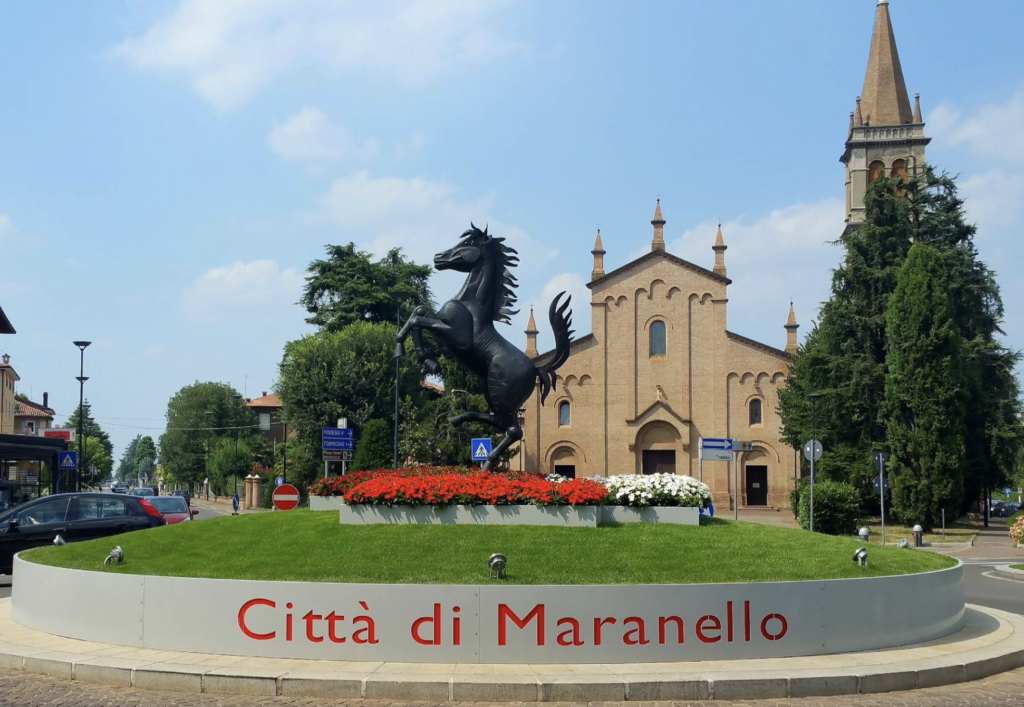
As Formula 1’s oldest and most successful team, Ferrari also carries unique expectations. The level of responsibility and scrutiny is exceptionally high, and the organisation’s rich history brings traditions and established ways of working that have evolved over decades. Introducing new ideas can sometimes require patience and persistence, particularly within such a heritage-driven environment. However, the opportunity to contribute to one of the most legendary teams in motorsport more than compensates for these challenges.
Working at Haas F1 offers one of the purest Formula 1 experiences on the grid. As the smallest team in the championship, every individual makes a meaningful contribution. There is little room for anonymity—every decision, every analysis, and every idea can have a direct impact on the performance of the car.
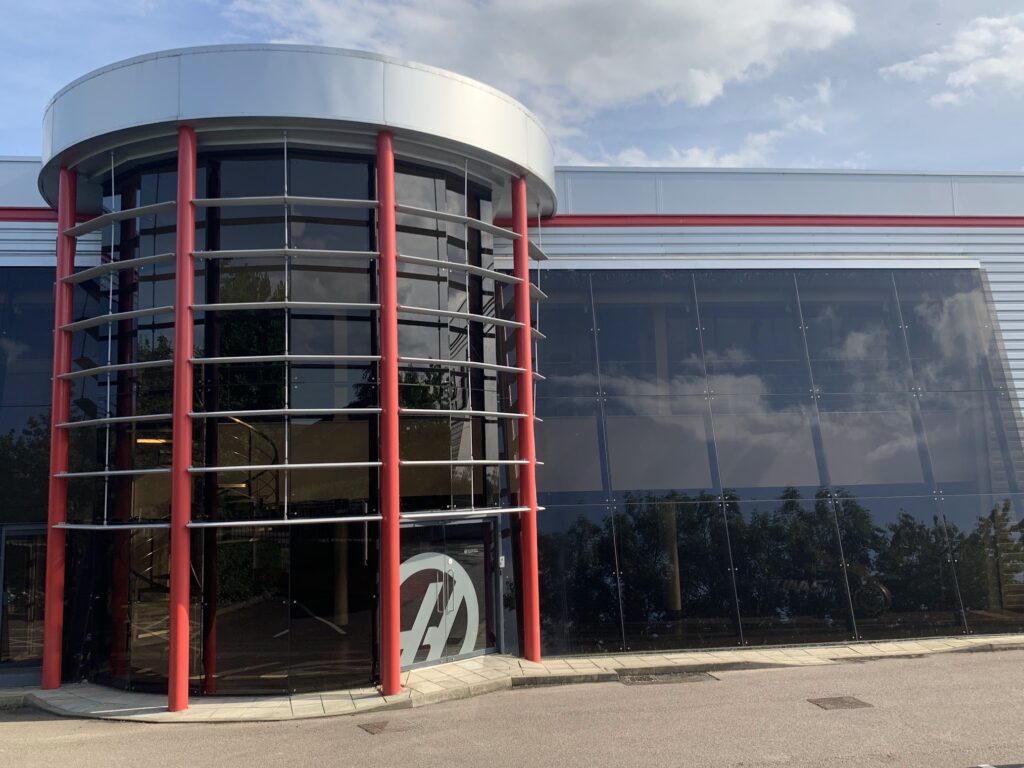
The team’s UK base is in Banbury, Oxfordshire, set in the rural heart of the Midlands, yet it sits right in the middle of “Motorsport Valley”.
One of Haas’ defining characteristics is its global structure. The team operates across three countries, adding an extra layer of complexity to an already demanding environment. Coordinating people, processes, and technical decisions across multiple locations while competing against much larger, fully centralised organisations creates unique engineering and operational challenges, making the work both demanding and highly rewarding.
Compared to many Formula 1 teams, the facilities are relatively compact, but they are designed and optimised for performance rather than scale. Every process is focused on efficiency, precision, and delivering maximum value. The pace is fast, expectations are high, and responsibility comes early, providing excellent opportunities for rapid professional development.
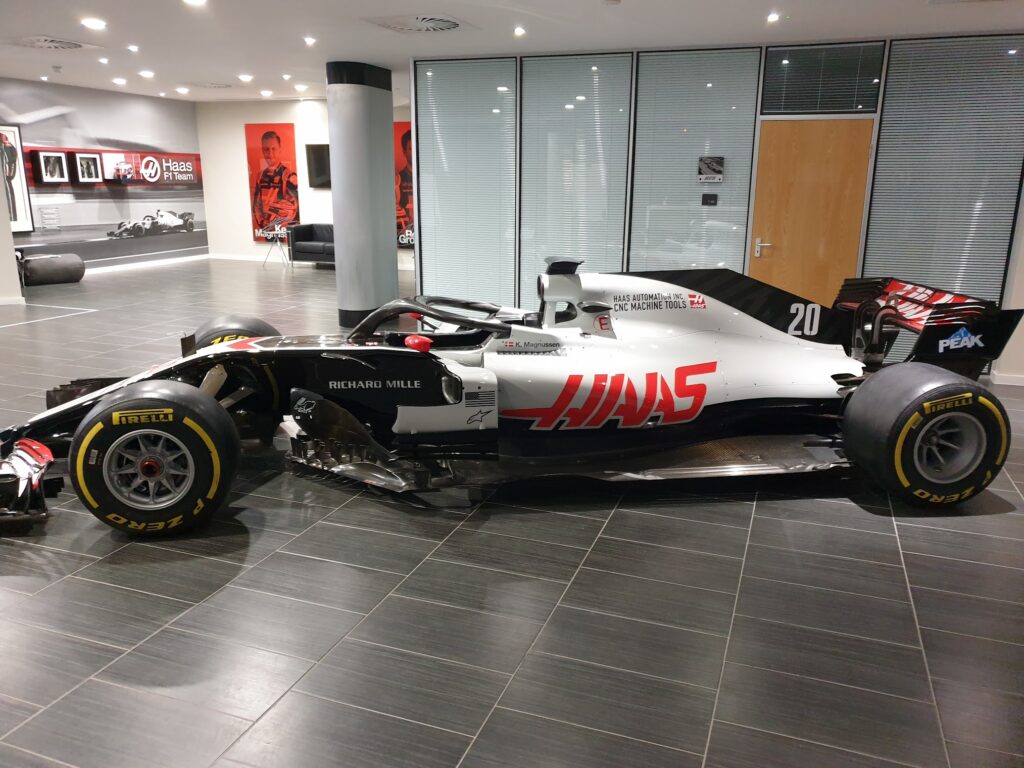
Employees work in close proximity to both the race car and the decision-making process, creating a strong sense of ownership over their work. With smaller teams and leaner structures, individuals are often exposed to a wider range of technical challenges than in larger organisations. Efficiency, creativity, and commitment are not simply desirable qualities—they are essential to competing successfully against teams with significantly greater resources.
As a smaller and still-growing team, Haas does not command the same relentless media spotlight or the sheer volume of applications that top-tier organisations like Mercedes attract. This means the recruitment process is less overwhelming, and talented individuals have a genuine chance to stand out without being lost in a sea of hundreds of equally qualified candidates.
While the level of engineering excellence at Haas is unquestionably high, the environment does not demand the same intimidating, near-perfectionist standard that defines the sport’s giants—there is more room to learn. For someone starting their Formula 1 career, this creates a far more accessible entry point, where raw potential and a strong work ethic can carry you further than a flawless CV
For engineers looking to take on responsibility from an early stage, broaden their technical experience, and experience Formula 1 in a highly hands-on environment, Haas offers a unique opportunity to make a visible impact within one of the sport’s most agile organisations.
By joining Aston Martin, you won’t just be signing up for a team—you’ll be stepping into the most privileged, breathtaking, and meticulously crafted factory environments in the entire paddock.
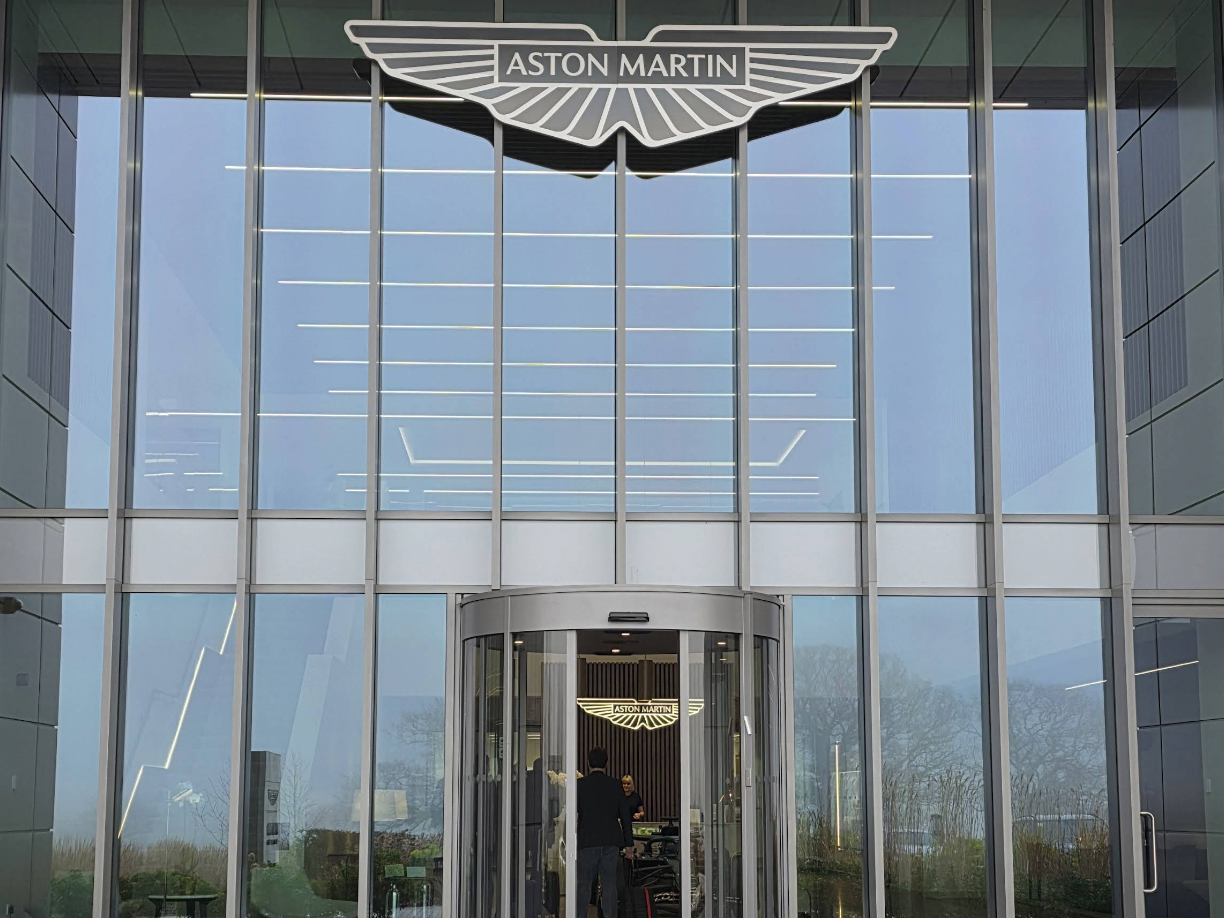
This state-of-the-art campus was completed in 2023, rising from the ground in record time as a bold symbol of Aston Martin’s transformation. It’s not just modern—it’s hyper-modern. Every square meter of this facility reflects a staggering multi-million-pound investment, spearheaded by Aramco, Aston Martin’s strategic partner.
The facility is utterly incredible—stunningly beautiful, bathed in natural light, and designed with the same obsessive attention to detail. It’s brand new, state-of-the-art in every conceivable way, and stands as a monument to what happens when British heritage meets visionary investment.
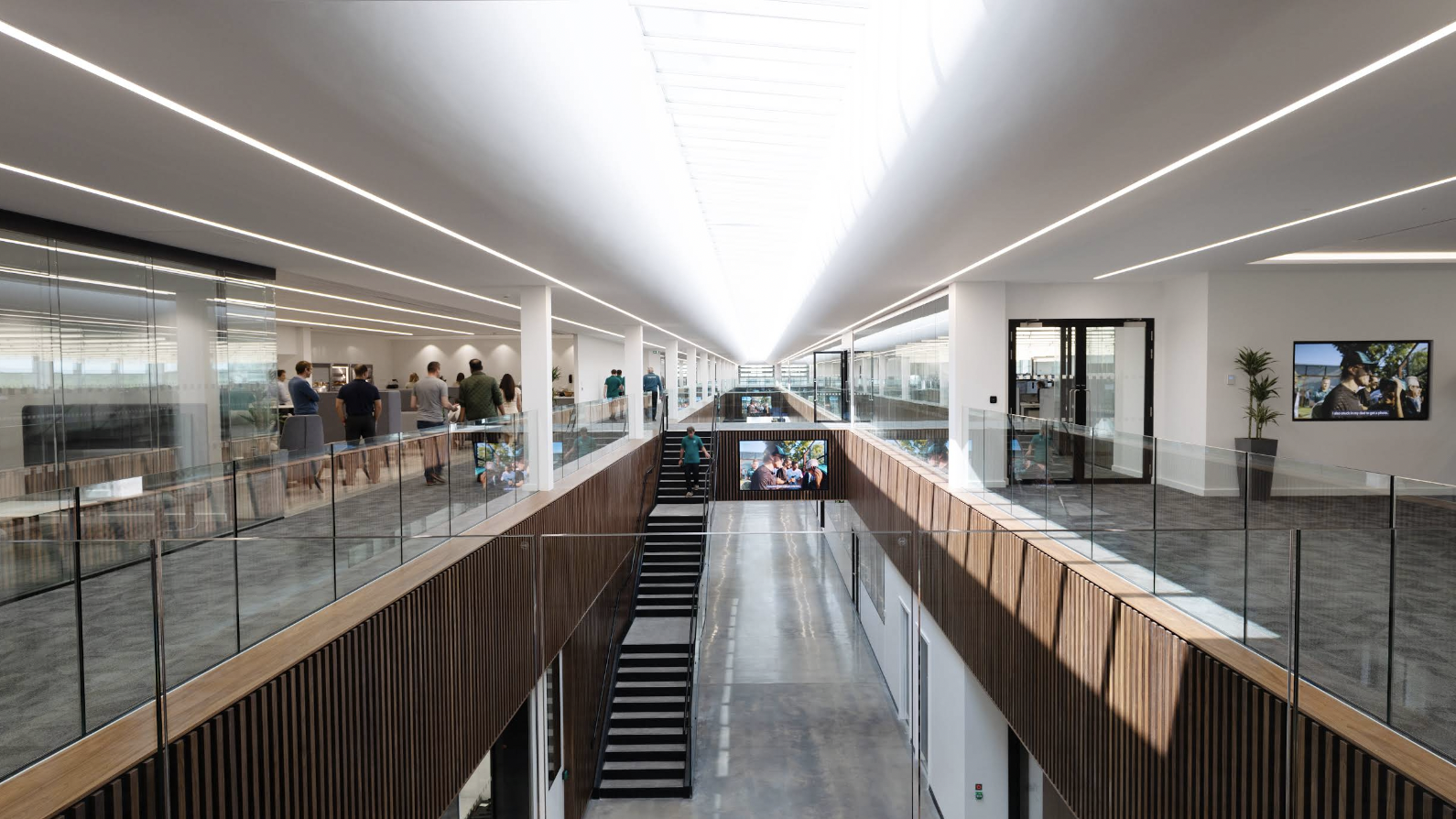
Located just minutes from one of the greatest circuits on the Formula 1 calendar, Aston Martin enjoys a truly privileged position in the heart of the famous “Motorsport Valley.” Being so close to Silverstone means employees are constantly surrounded by the atmosphere that makes Formula 1 so special. The surrounding area is home to many other motorsport companies, creating an environment where racing is part of everyday life. During the British Grand Prix, the excitement reaches another level, with events hosted at the factory and thousands of fans gathering nearby—an experience that very few teams (apart from Cadillac) can offer.
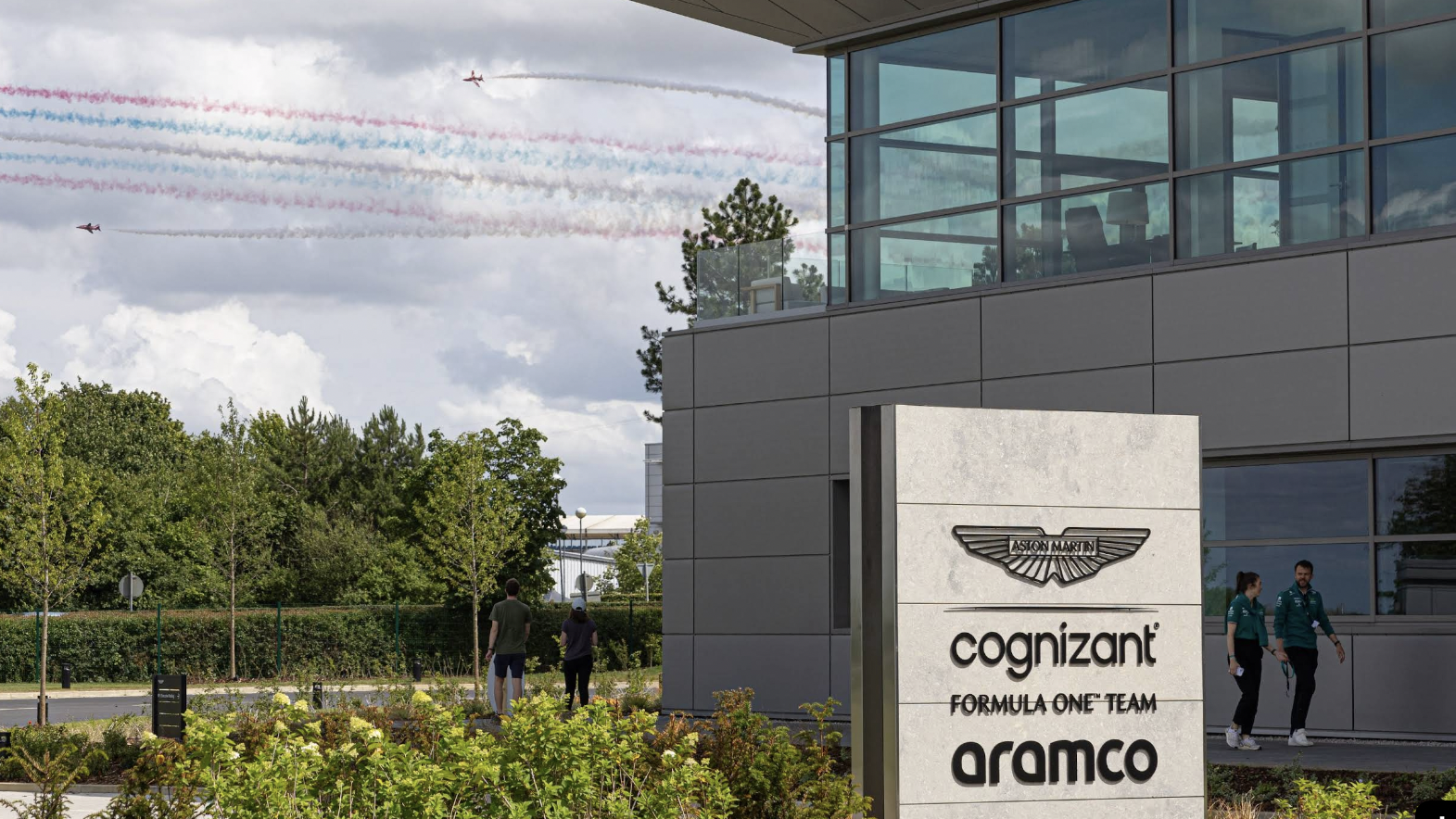
The location is complemented by what is widely considered one of the most impressive facilities on the Formula 1 grid. Opened only a few years ago, the Aston Martin Technology Campus is exceptionally modern and designed with employee wellbeing in mind. The campus features on-site baristas, a fully equipped gym, and even a running track inspired by the Silverstone circuit. Surrounded by the English countryside, it also provides the perfect setting for a walk or a run during breaks—weather permitting, of course.
The facilities are absolutely incredible—we’re talking about a private helipad for seamless arrivals and departures, because why waste a single minute in traffic when you could be on track? And then there’s the rooftop terrace, offering breathtaking, panoramic views over the legendary Silverstone circuit. Imagine stepping out, coffee in hand, watching the cars carve through Copse or Maggotts, all while knowing you’re part of the very machinery that makes it possible
The on-site canteen offers a good selection of meals (by UK standards!), and every Grand Prix weekend the menu includes a signature dish from the country hosting the race. It’s a thoughtful touch that reflects the team’s commitment to creating an enjoyable working environment and making long days at the factory a little more special.
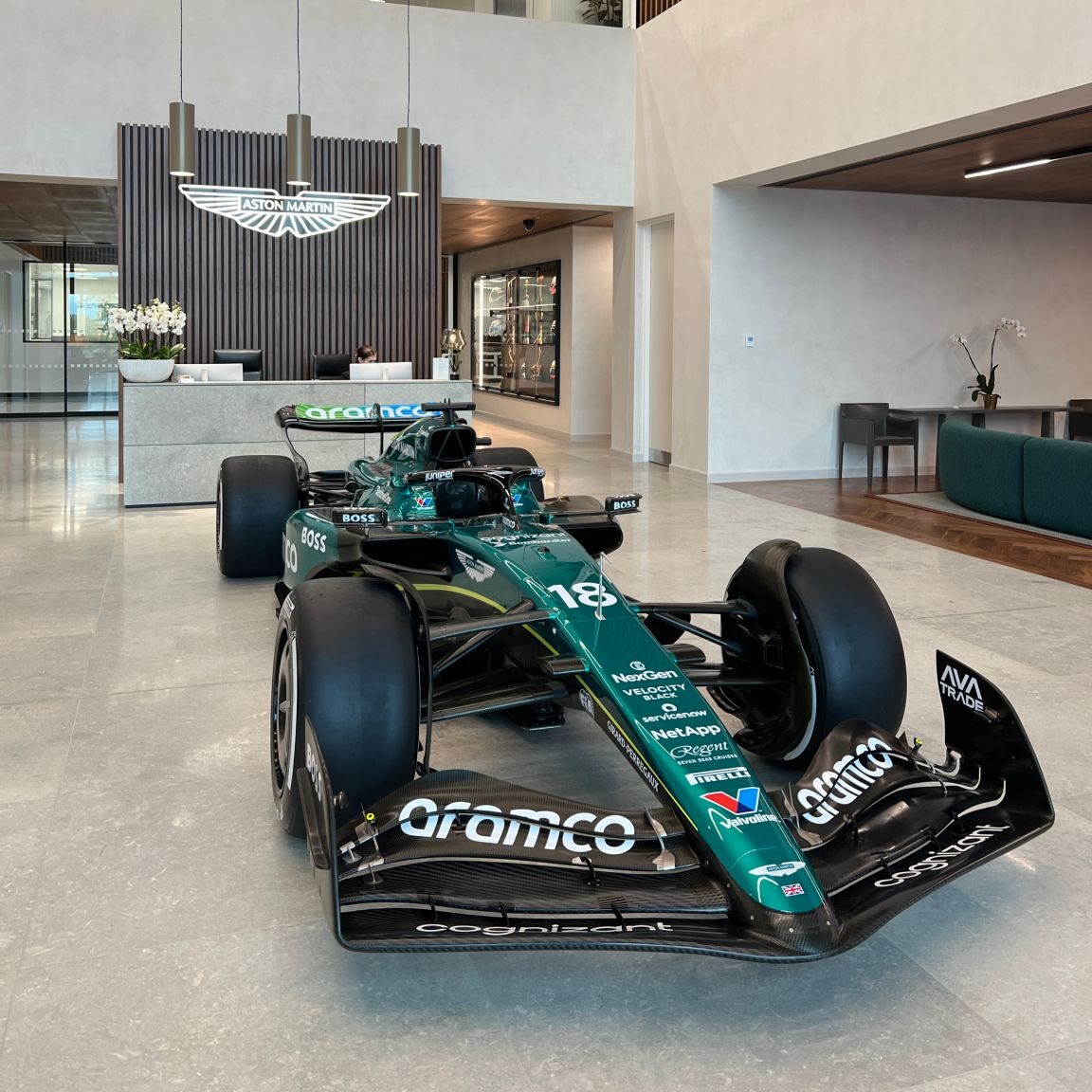
One of the standout features of the campus is the visibility of the entire manufacturing process. Employees can see carbon fibre components, metallic parts, and 3D-printed pieces being produced before progressing through assembly and ultimately becoming part of the race car. This transparency across the production chain helps everyone feel connected to the final product and provides a deeper appreciation of the work carried out across different departments.
The working atmosphere is known for being welcoming and collaborative, with approachable managers and colleagues who create an environment where asking questions, learning, and developing professionally comes naturally.
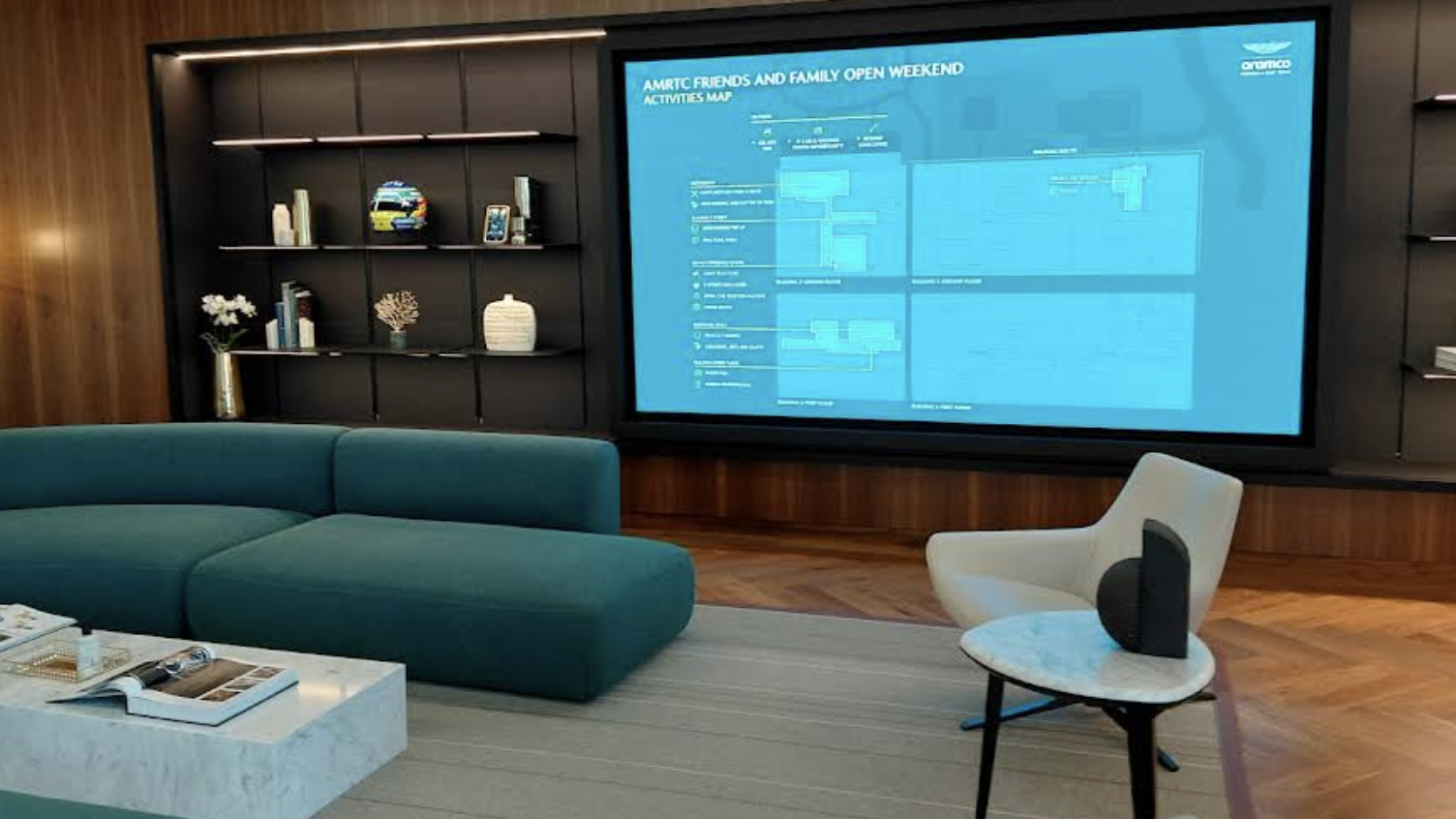
The main drawback is simply its location in the UK—and all that comes with British weather. Compared to teams such as McLaren or Racing Bulls, Aston Martin is one of the furthest from London, making it less practical to live in the capital. Oxford is often considered one of the best places to live nearby, offering a vibrant city centre, excellent amenities, and convenient access to London. Public transport to the factory is relatively limited, however, so having access to a car makes commuting considerably easier due to the campus’s rural location.
The McLaren F1 factory, officially known as the McLaren Technology Centre (MTC) in Woking, England, is more than just a F1 factory. Inside, the headquarters feels more like a science fiction campus than a traditional factory. Natural light floods the enormous glass walls, illuminating spotless white floors and polished aluminium surfaces. Every corridor is immaculately clean, with a level of precision more reminiscent of a surgical laboratory than an automotive facility. There is a sense that every millimetre has been carefully considered.
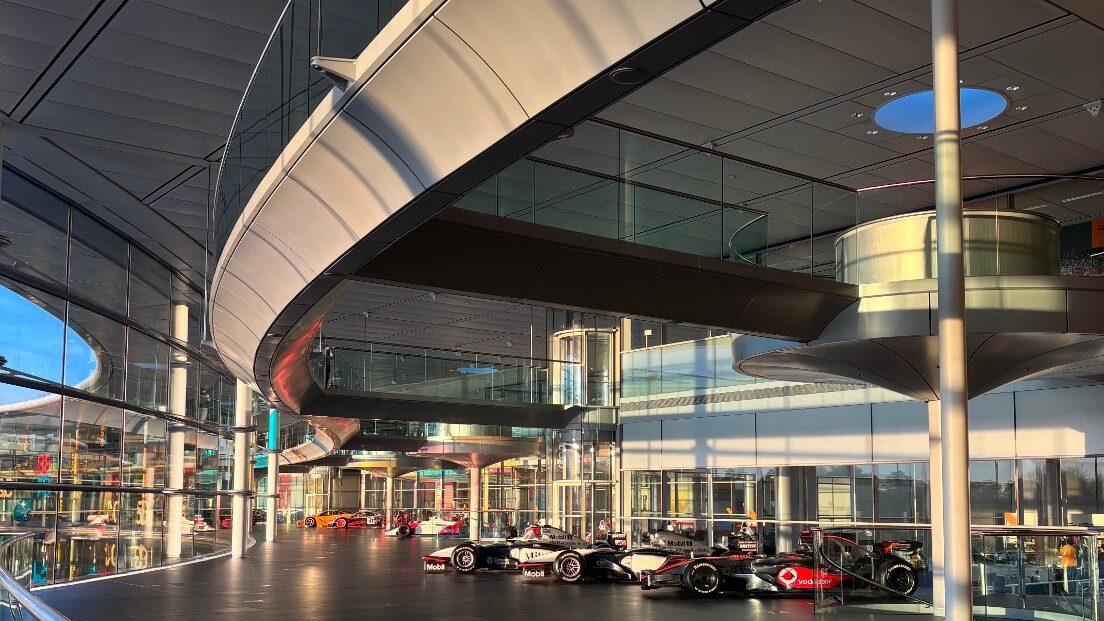
Woking, just a short direct train ride from London Waterloo. This makes it an ideal place to live, as you get the best of both worlds: a quieter town with easy access to everything London has to offer. Like everywhere else in the UK, rain is a regular companion, so carrying an umbrella quickly becomes part of your daily routine!

Getting to the McLaren Technology Centre (MTC) is incredibly convenient. A dedicated shuttle bus runs from Woking station and takes you directly to the campus in just five minutes. If you’re arriving from abroad, there is also a direct coach service from Heathrow Airport, making your first journey to McLaren straightforward and stress-free.
Working at McLaren also means being surrounded by people who are exceptionally passionate about engineering and motorsport. Whether you’re a graduate or an experienced engineer, you’re constantly learning from colleagues with decades of experience at the highest level of racing. The pace is demanding and expectations are high.
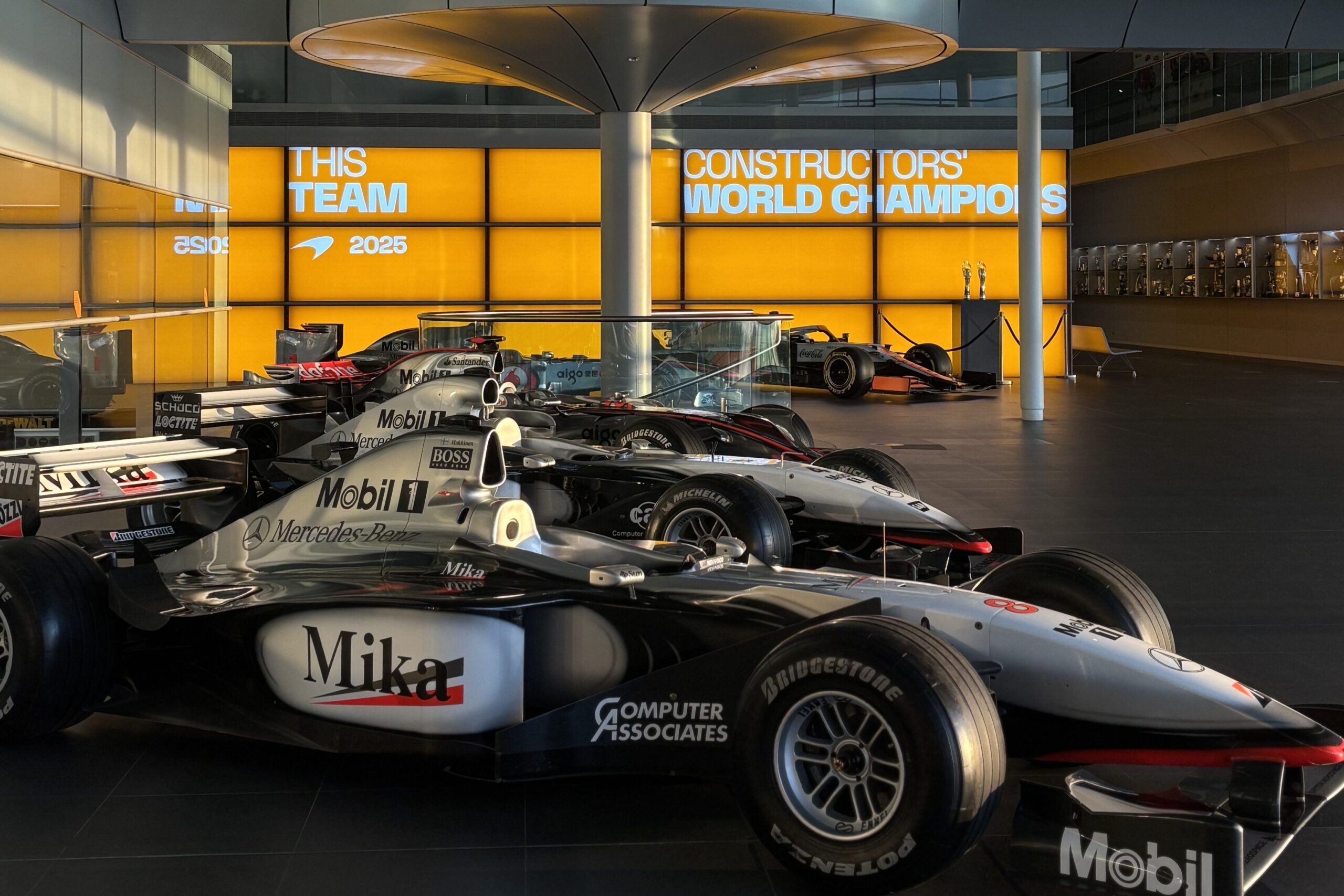
The team culture is one of McLaren’s greatest strengths. There is a genuine focus on creating a positive, collaborative, and enjoyable working environment, with the belief that great people and a great culture lead to great performance. From your very first day, you’ll notice how much emphasis is placed on McLaren’s values and on making everyone feel part of one big family.
The facilities are excellent too. The MTC features an on-site gym with a wide range of classes, including yoga, Pilates, and Hyrox, helping employees maintain a healthy work-life balance alongside the demands of Formula 1.
Outside of Formula 1, McLaren has a strong presence in automotive engineering and advanced technologies. Sharing the campus with teams working on road cars, electrification, manufacturing innovation, and applied technologies creates a unique environment where ideas often flow between different disciplines. It reinforces the feeling that you’re part of a much broader engineering organisation rather than a standalone racing team.
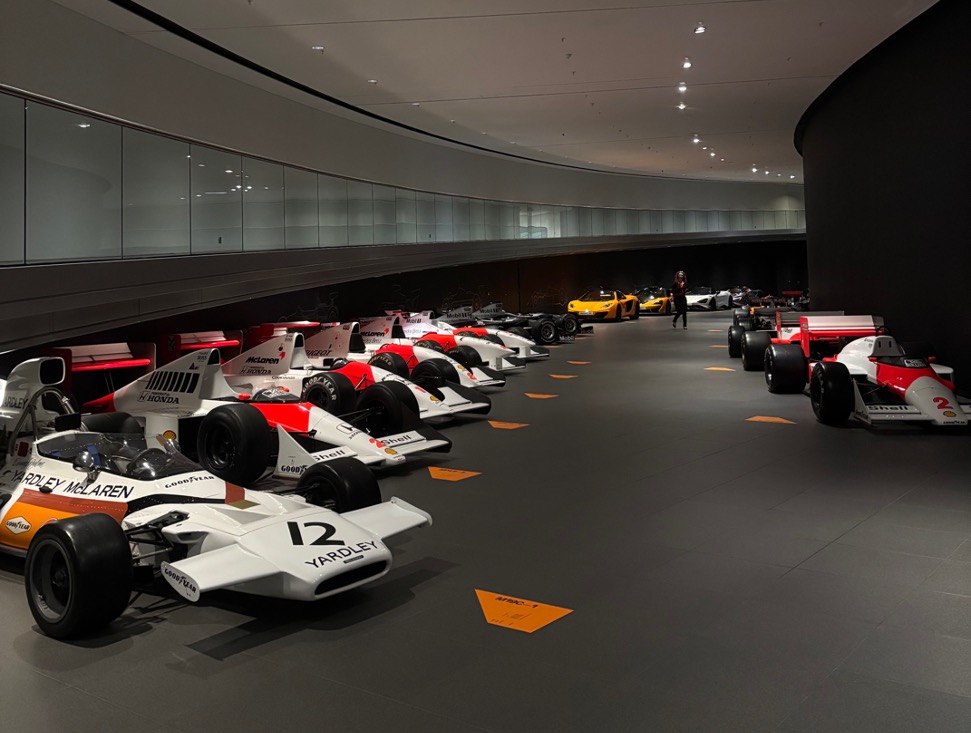
It’s true that the cost of living in the UK—especially so close to London—is relatively high, but Its location rewards with exceptional connectivity, access to one of the world’s most vibrant cities, and countless opportunities to enjoy everything the surrounding area has to offer. For anyone looking to build a career in Formula 1 while enjoying life both inside and outside of work, Woking is a fantastic place to be.